RESONANT
Hear the science.
Find your sound.
Six instruments. One hands-on sound laboratory. A musical journey built around your curiosity.
Enter the labWhat makes a note?
Choose an instrument, change the sound, and discover what is vibrating.
Sound is off. Choose a note when you are ready.
Struck string.
A world of sound.
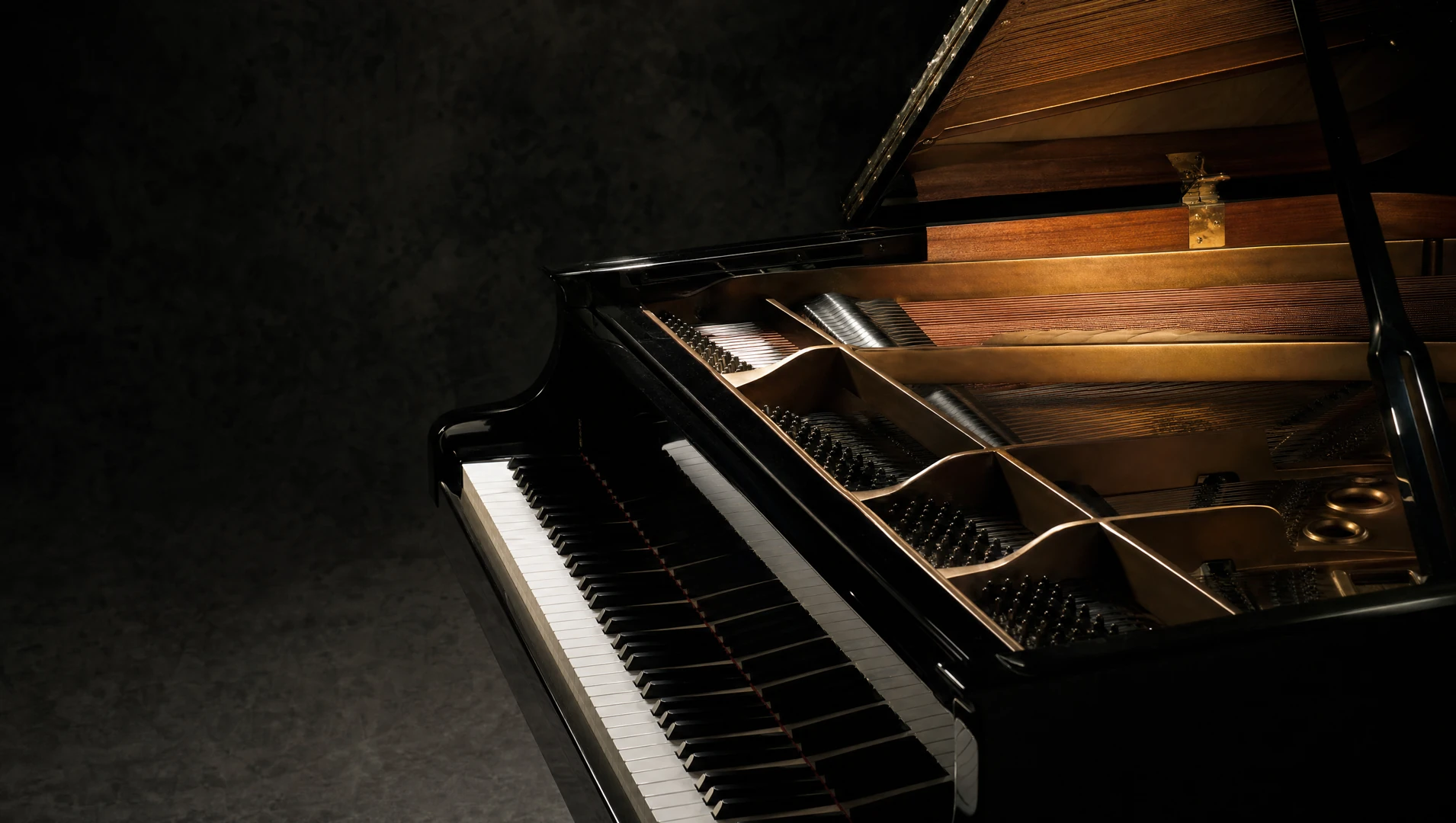
A hammer strikes a string. Its vibration passes through the bridge to a soundboard, moving much more air than the string alone.
- Energy starts with
- Struck string
- The sound is shaped by
- Soundboard and body
Try this
Shorten the decay to hear a struck note fade. Real piano strings have slightly inharmonic overtones.
Synthesised teaching models, not recordings or exact physical simulations. The display measures the synthesised audio signal. Compare the full tone with a single-frequency sine wave, then switch to the spectrum to see its components. Changes apply to the next note.
Yamaha: how a piano produces sound ↗Make room for music.
Progress has no universal deadline. Use a practice budget to plan a routine you can sustain.
Begin with relaxed hand position, steady pulse and short phrases in each hand.
This example stores only your practice preferences in this browser.
At 3 hours a week, that is approximately 3 to 6 months.
Explore posture, rhythm and a small piece or pattern. This is a planning example, not a grade or proficiency guarantee.
Piano: example learning horizons
- Simple pieces and basic control
- 3 to 6 months
- Independent beginner-to-intermediate repertoire
- 2 to 4 years
Editorial examples for this fictional school, not validated predictions or comparisons of difficulty. They assume regular lessons and around 30 minutes of focused practice on five days each week. A teacher should assess your own goals and progress.